Skip to content

Composite Shake

Composite Shake Roofing in Southern Maine

The character of cedar shake without the upkeep. Class-A fire-rated, impact-rated, and beautiful in a way asphalt never quite is.

Real cedar shake looks incredible — for about ten years. Then comes the moss, the curl, the maintenance, and eventually the replacement. Composite shake gives you the same hand-split character, the same depth of shadow, and the same curb-appeal lift, without any of the decay.

We install premium composite from manufacturers like DaVinci, Brava, and F-Wave. These aren't lightweight imitations — they're engineered polymers with Class-A fire ratings, Class 4 impact ratings, and 50-year warranties.

At a glance

  • Premium composite shake (DaVinci, Brava, F-Wave) with 50-year warranties
  • Class-A fire ratings and Class 4 impact ratings
  • Color and depth that holds up over decades — no fade, no curl
  • Resistant to rot, insects, moss, and the freeze-thaw cycle
  • Adds genuine resale value to coastal and historic Maine homes
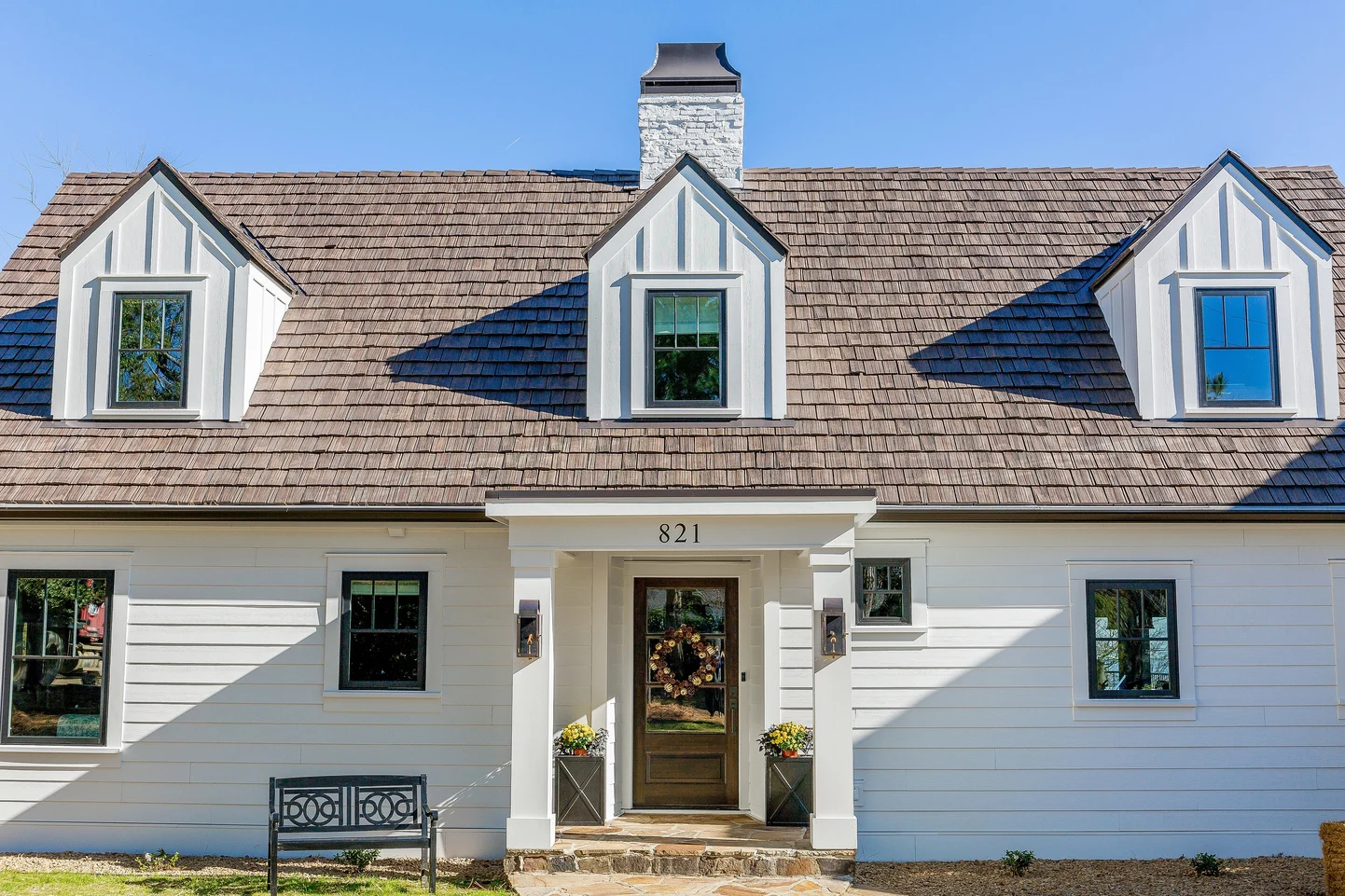
Coastal Maine home featuring composite shake roofing with deep shadow lines

What composite shake actually is

Composite (also called synthetic) shake is an engineered polymer tile — typically a blend of virgin resin, recycled polymer, UV stabilizers, fire-retardant additives, and color pigments that runs all the way through the tile rather than sitting on the surface. The premium lines are molded from actual hand-split cedar shakes or quarried slates, so the surface texture, the chamfered edges, and the irregular profile are real — not a printed pattern.

The lines we install most often: DaVinci Roofscapes (multi-width and single-width shake, Bellaforté slate), Brava (cedar shake, old-world slate, barrel tile), and F-Wave Revia (a true-shake-profile synthetic with a strong warranty and a more accessible price point). All Class A fire, all Class 4 impact, all 50-year-or-better warranties.

How we install composite shake

  1. Full tear-off and deck inspection. Composite tiles need a sound, flat deck — soft spots come out and get replaced.
  2. Ice & water shield + synthetic underlayment. Same Maine assembly as asphalt and metal: ice & water at eaves, valleys, sidewalls, and penetrations; synthetic over the field.
  3. Manufacturer-specific starter and battens. Each composite line has its own starter strip and exposure spec — we follow it exactly, because that's what unlocks the warranty.
  4. Tile placement and nailing pattern. Composite shake is installed with a specific nailing pattern (typically four nails per tile, in marked locations) using ring-shank stainless or hot-dipped galvanized nails — never staples. Tile exposure is set per the manufacturer's spec.
  5. Stagger and width variation. For shake profiles, we vary tile widths across each course so no two courses repeat — this is what makes a composite shake roof read as natural cedar from the street.
  6. Hip, ridge, valley, flashing. Manufacturer hip and ridge tiles (not asphalt caps), open or closed valleys per design, sidewall and chimney flashing in copper or coated aluminum.
  7. Cleanup and magnet sweep. Same as every job.

Why composite works in Maine

Polymer doesn't absorb water — so freeze-thaw cycles that destroy real cedar in 10–15 years on the coast have no effect on composite. Color is molded through the tile, so chips and edge wear don't show. Class A fire ratings exceed what cedar can achieve. Class 4 impact ratings often qualify for insurance discounts. And because the tile is dimensionally stable, you don't get the curling, cupping, and granule loss that ages an asphalt roof from the street.

Who composite is right for

Coastal capes, shingle-style summer homes, historic colonials, and any home where the look of cedar shake or slate is part of the architecture but the maintenance and lifespan of real cedar isn't worth it. Composite is also a strong call for homeowners who want a premium roof without committing to the metallic aesthetic of standing seam. Less ideal for budgets where premium architectural asphalt would hit the mark, or for very simple ranch homes where the profile detail is wasted.

Warranty and lifespan

Manufacturer material warranties run 50 years (DaVinci, Brava) or limited-lifetime (some F-Wave product lines), with strong transferability to subsequent owners — a real factor at resale. Class A fire and Class 4 impact ratings often unlock insurance premium reductions. Our workmanship warranty covers the install. Realistic service life: 50+ years on the coast with effectively zero maintenance.

Frequently asked

Common questions

Does composite shake really last 50 years in Maine?
Yes — and the manufacturers stand behind it with 50-year-to-lifetime warranties. Composite polymer doesn't rot, doesn't curl, doesn't host moss the way real cedar does, and shrugs off freeze-thaw cycles that destroy wood shake in 12–15 years on the Maine coast.
How is composite shake different from real cedar?
Visually, the premium lines (DaVinci, Brava, F-Wave) are nearly indistinguishable from hand-split cedar at curb distance — same depth, same shadow line, same irregular profile. Functionally, they're Class A fire-rated (cedar is Class C at best), Class 4 impact-rated for hail, and require zero maintenance for 50 years. Cedar needs treatment every few years and replacement at 15–20.
Is composite shake heavier than asphalt?
Slightly — composite shake runs around 250–400 lb per square depending on profile, vs. 240–340 for architectural asphalt. Almost every residential framing system handles it without modification, but we confirm during the inspection if the roof has had structural changes.
What does composite shake cost vs. asphalt or standing seam?
Composite typically lands between premium asphalt and standing seam — roughly 2–3x architectural asphalt, comparable to (sometimes slightly below) standing seam. The 50-year service life and curb-appeal lift on coastal capes and historic colonials make it a strong value play for homes in the $600k+ range.
Will moss or algae grow on it?
Composite polymer doesn't host moss or algae the way cedar or organic-mat shingles can. The premium manufacturers also bake in algae-resistant additives. In 20 years on the coast you should see essentially no staining.
Can I get composite in slate or shake profile?
Both — and we install both. DaVinci and Brava make polymer slate (Bellaforté Slate, Brava Slate) that mimics natural slate at a fraction of the weight and cost. The shake profiles read as hand-split cedar. We'll bring physical samples to your consultation.

Ready when you are

A roof is a long decision. Let's get yours right.

No pressure, no gimmicks. Just a precise quote, an honest conversation, and a roof built for Maine weather.