
Skip to content

Storm Damage

Storm Damage: Repair or Replace?

Storm damage often means a replacement your insurer may cover. Wind, falling trees, hail and ice dams: we assess the damage, document it for your adjuster, and tell you honestly whether the roof is worth patching. We take insurance work and can meet your adjuster on the roof.

After the storm: what we check

Storm damage isn't always obvious from the driveway. A March wind can peel back a few shingles; a fallen limb can crack decking you can't see; hail and debris impacts leave marks that matter to an insurer. We start with an in-person inspection of the roof, the attic, and the structure, then tell you plainly what's damaged and what isn't.

  • Wind. Torn, lifted, and missing shingles, wind uplift at edges and ridges.
  • Trees and limbs. Punctures, cracked decking, and damage to the framing underneath.
  • Hail and debris. Impact damage documented with photos and measurements.

We get on the roof and photograph the damage ourselves. If it's too high or steep to walk safely, a drone inspection shows you the damage instead.

At a glance

  • Wind, fallen-tree, and hail damage assessment
  • Roof, attic, and structure inspected, not just shingles
  • Photos, measurements, and scope for your adjuster
  • An honest repair-or-replace answer
  • Full replacement with ice & water shield and ventilation upgrades
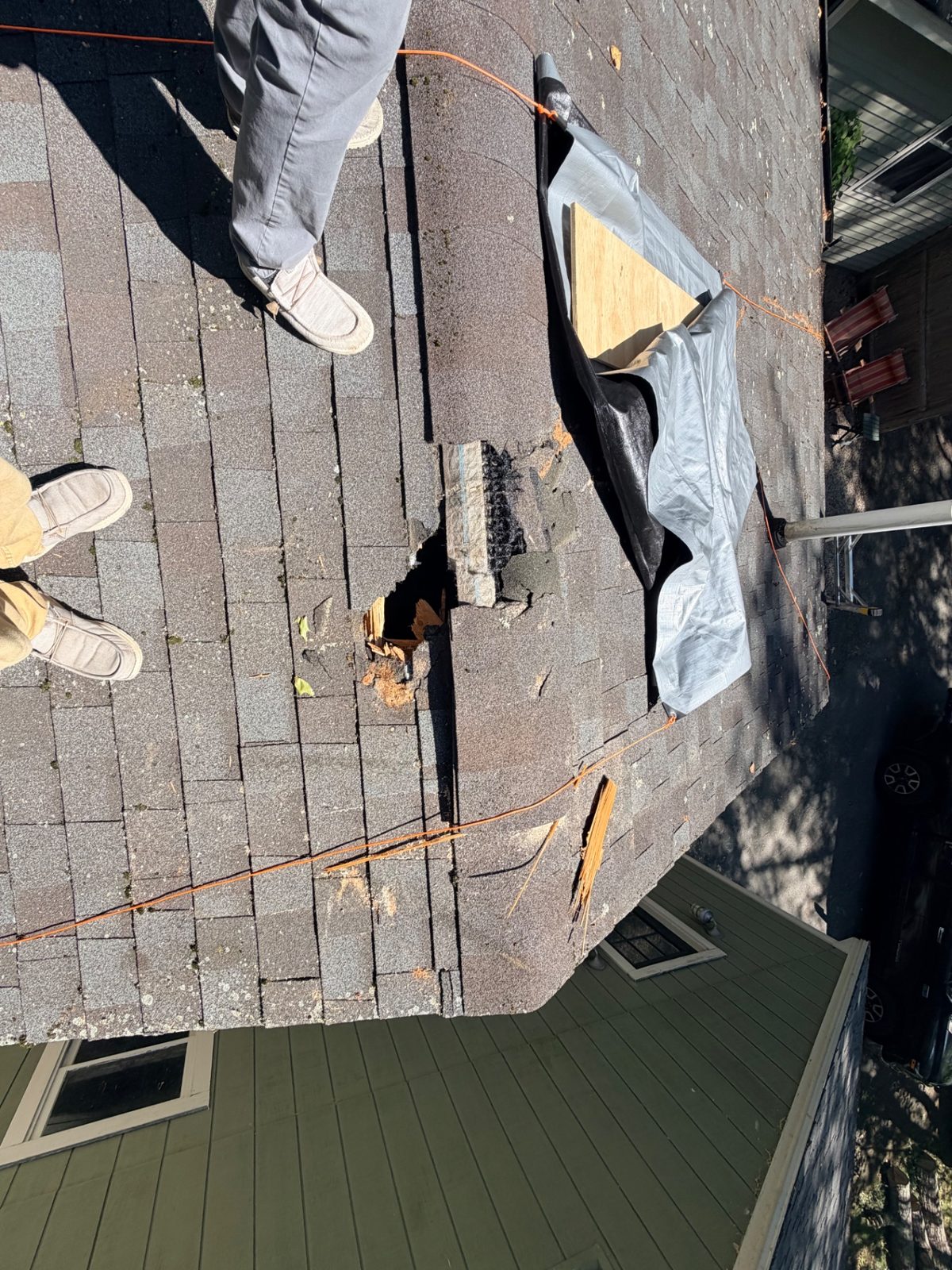
Tarp covering the opening where a tree came through a roof in Yarmouth, Maine

Storm repair in Yarmouth

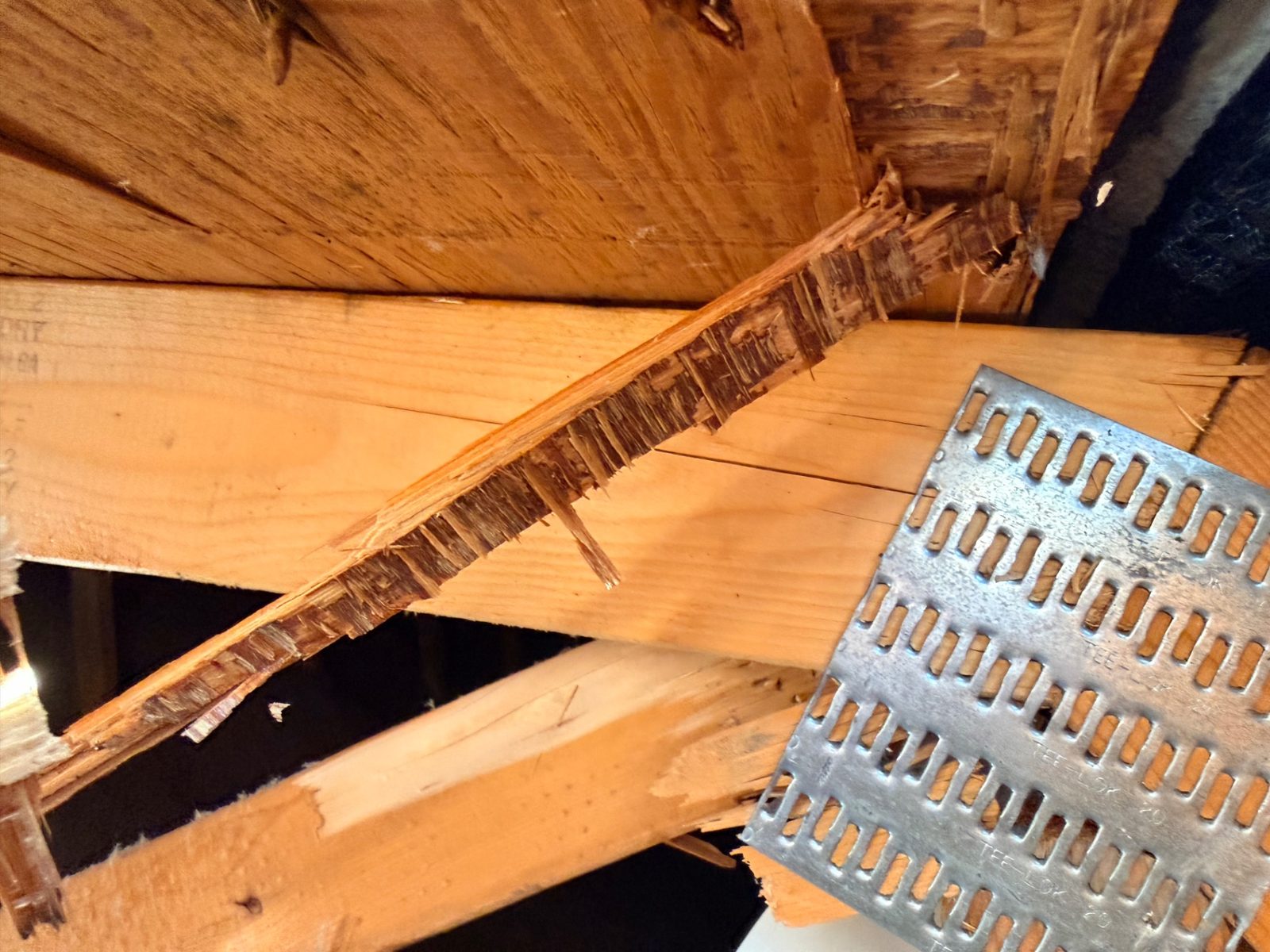
Splintered truss member inside the Yarmouth roof after the tree impact
Truss member splintered by the tree impact.
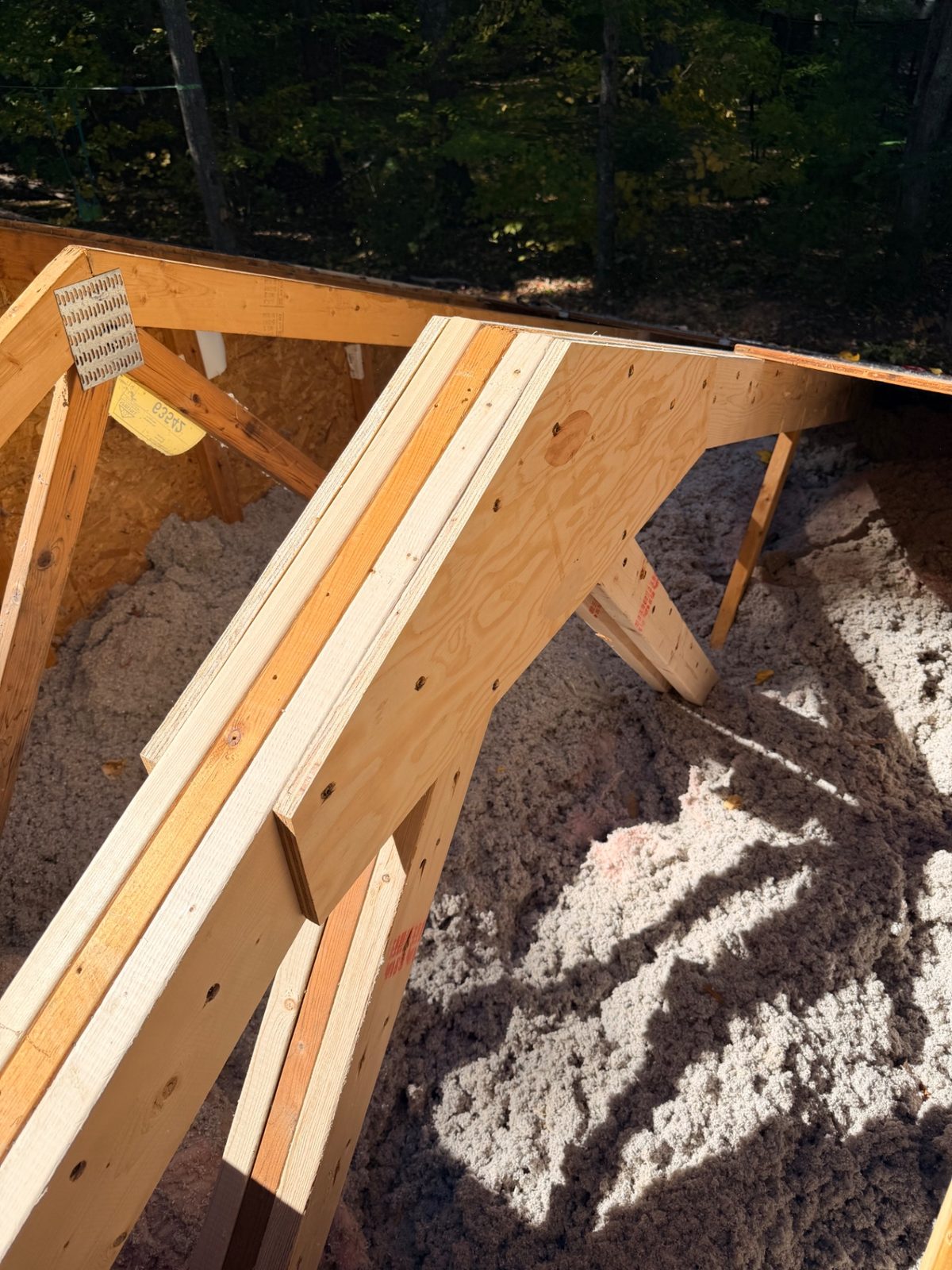
New LVL beam and framing members installed beside existing trusses on the Yarmouth repair
New structural members set alongside the existing framing.
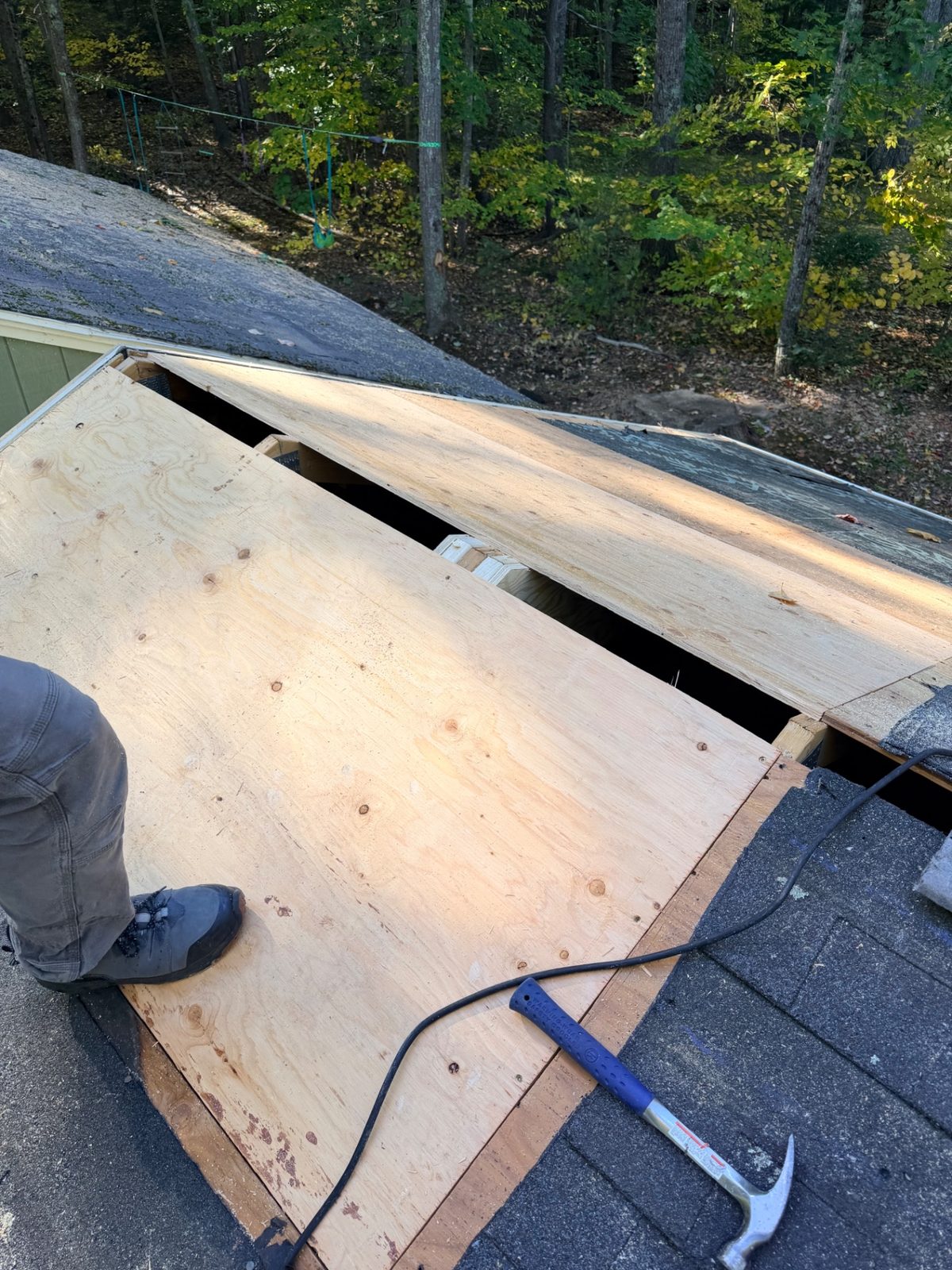
New plywood sheathing closing the repaired roof deck on the Yarmouth home
New sheathing closing the deck back up.

A storm repair in Yarmouth

When a late-summer microburst hit the greater Portland area, a tree came down on a Yarmouth home, straight through the roof and into the truss system. That wasn't a shingle patch. The opening was tarped, then we worked with the homeowner, their insurance company, the Town of Yarmouth, and an engineer to rebuild the damaged framing: new structural members sistered alongside the originals, new sheathing to close the deck, and the roof put back together over it.

See the full Yarmouth project in our gallery.

Repair or replace after a storm

A few lifted shingles on a newer roof can be a small fix. On a roof that's 20 or more years old, storm damage is usually the push to replace rather than patch: you'd be paying to repair a surface you'll tear off soon anyway. We'll tell you which one you're looking at.

  • The roof is 20+ years old (asphalt typically lasts 25 to 30 years in Maine)
  • Leaks keep coming back, or ice dams form every winter
  • Shingles are curling, cracking or losing granules
  • Soft spots in the decking, or daylight in the attic
  • Your insurer is asking for a replacement to renew

See how a full roof replacement works.

Ice dams: why they happen and how to stop them

Most ice dams start inside the house. Heat escaping into the attic melts the snow on the roof; the meltwater runs down to the cold eaves and refreezes. The ice builds a dam, and water backs up under the shingles and into ceilings and walls.

The lasting fix addresses the cause, and it's done right when the roof is replaced (more on ice dams and winter leaks):

  • Ice & water shield along the eaves, past the warm wall line, and in valleys, so backed-up water has nowhere to go.
  • Ventilation: a balanced soffit-to-ridge vent stack keeps the underside of the deck cold and dry through freeze-thaw.
  • Attic insulation, where heat loss into the attic is the root of the problem.

Documenting it for your adjuster

Photograph the damage as early as it's safe to, and note the date and cause. Our inspection adds what an adjuster needs: photos, measurements, a damage report, and a scope of work. We can meet your adjuster on the roof. For the claim itself, step by step, see our insurance claims guide.

Rebuilding stronger

If the storm means a new roof, it's worth knowing about Fortify Maine, the state's planned grant program for roofs built to the IBHS FORTIFIED standard. It isn't accepting applications yet; the state anticipates opening in the 2027 construction season. Not sure the damage calls for a new roof? Read repair or replace?, or roof leaks if water is coming in now.

Frequently asked

Common questions

What causes ice dams on Maine roofs?

Usually heat escaping from the house into the attic melts snow, which refreezes at the cold eaves. Meltwater then backs up under the shingles. The fix is a combination of ice-and-water shield, ventilation, and sometimes attic insulation, not just new shingles.

Will insurance cover storm or ice dam damage to my roof?

Storm, wind, hail, and ice-dam damage are the most commonly covered causes in Maine; wear and age usually are not. Your policy and your adjuster make the call. We document damage with photos and measurements in the format adjusters ask for, and we can meet your adjuster on the roof.

A tree hit my roof. Is it more than a shingle repair?

It can be. On our Yarmouth tree-damage job, the tree went through the roof and into the truss system, so the repair meant working with the homeowner, their insurer, the town, and an engineer to rebuild the framing before the roof went back together. We inspect the roof, attic, and structure, not just the surface.

Does storm damage mean I need a new roof?

Often, yes. On an older roof, storm damage is usually the push to replace rather than patch, and a replacement your insurer may cover. Your policy and your adjuster decide what's covered; we inspect the roof, attic and structure and tell you plainly what we find.

Can you make my next roof more storm-resistant?

Yes. When we fix ice dam damage we address the cause: extending ice & water shield past the warm wall line, improving ventilation, or both. Maine's planned Fortify Maine program would help eligible homeowners pay toward roofs built to the IBHS FORTIFIED standard; it isn't accepting applications yet, and the state anticipates opening in the 2027 construction season.

Ready when you are

A roof is a long decision. Let's get yours right.

No pressure, no gimmicks. Just a free estimate, an exact written quote, and a roof built for Maine weather.