
Skip to content

Roof Leaks

Roof Leaking? Repair or Replace?

Water coming through the ceiling? Here's what to do right now, how we find where it's really getting in, and an honest answer on whether the roof is worth patching. On a roof that's 20 or more years old, a leak is usually the first sign the whole roof is near the end.

Leaking right now? Start here.

  1. Move valuables out of the way. Electronics, furniture, photographs, anything that can't get wet.
  2. Catch the water. Buckets, towels, a tarp on the floor. Keep people away from sagging ceilings and wet light fixtures.
  3. Photograph it for your insurer. The ceiling, the water, damaged belongings, and whatever you can see of the roof from the ground. Note the date.
  4. Don't climb onto a wet roof. A wet, icy, or damaged roof is no place for a ladder. That part is our job.
  5. Call us. (207) 360-ROOF, Monday to Friday, 7 a.m. to 5 p.m., or tell us what you're seeing and we'll call you back.

At a glance

  • Tracing from the stain back to the real entry point
  • An honest repair-or-replace answer on every leak
  • New flashing, never caulked over
  • Photos of what we found
  • Full replacement in asphalt, standing seam metal or Brava composite
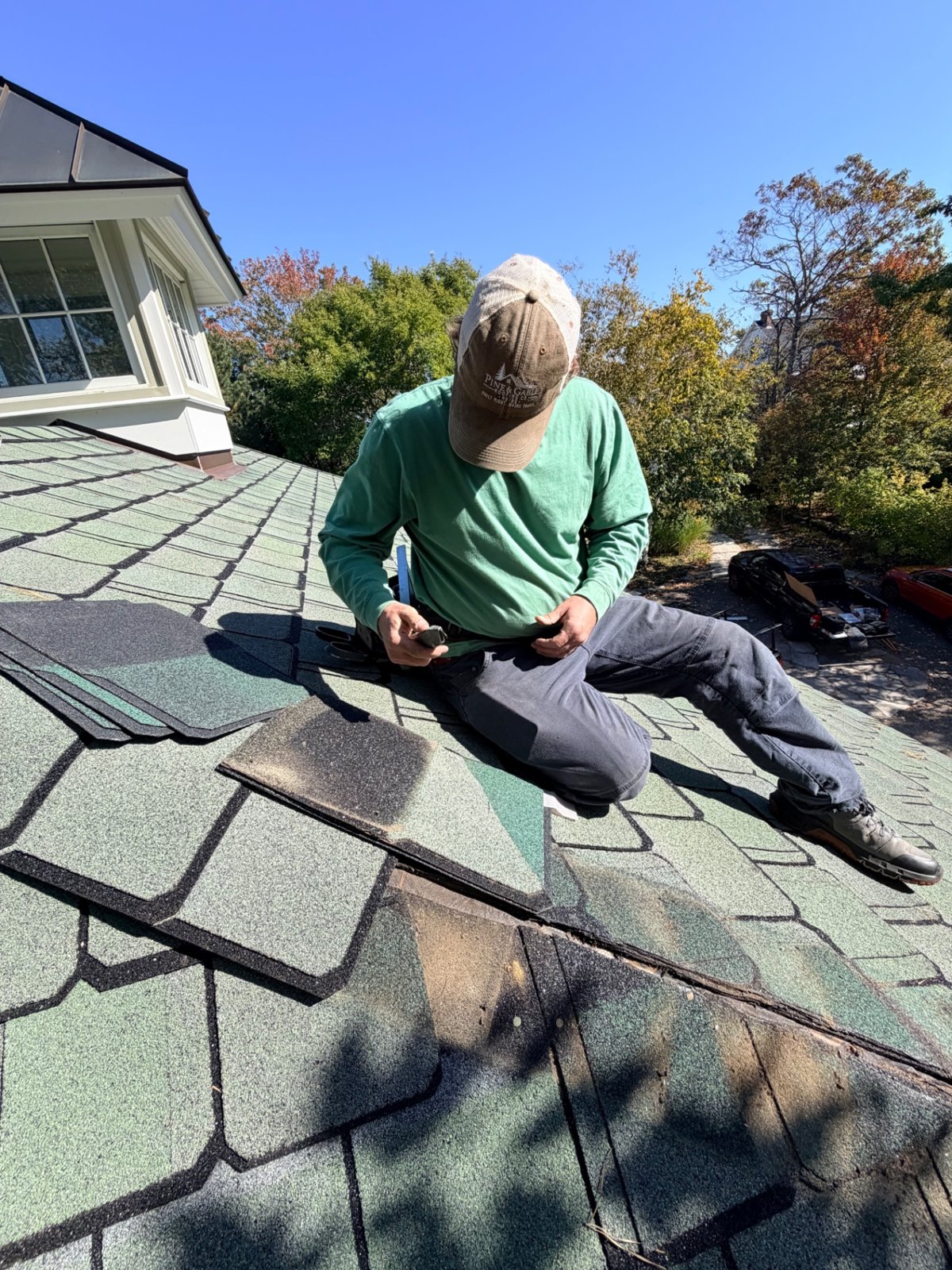
Roofer installing replacement cap on a green shingle roof during a repair in Saco, Maine

On the job

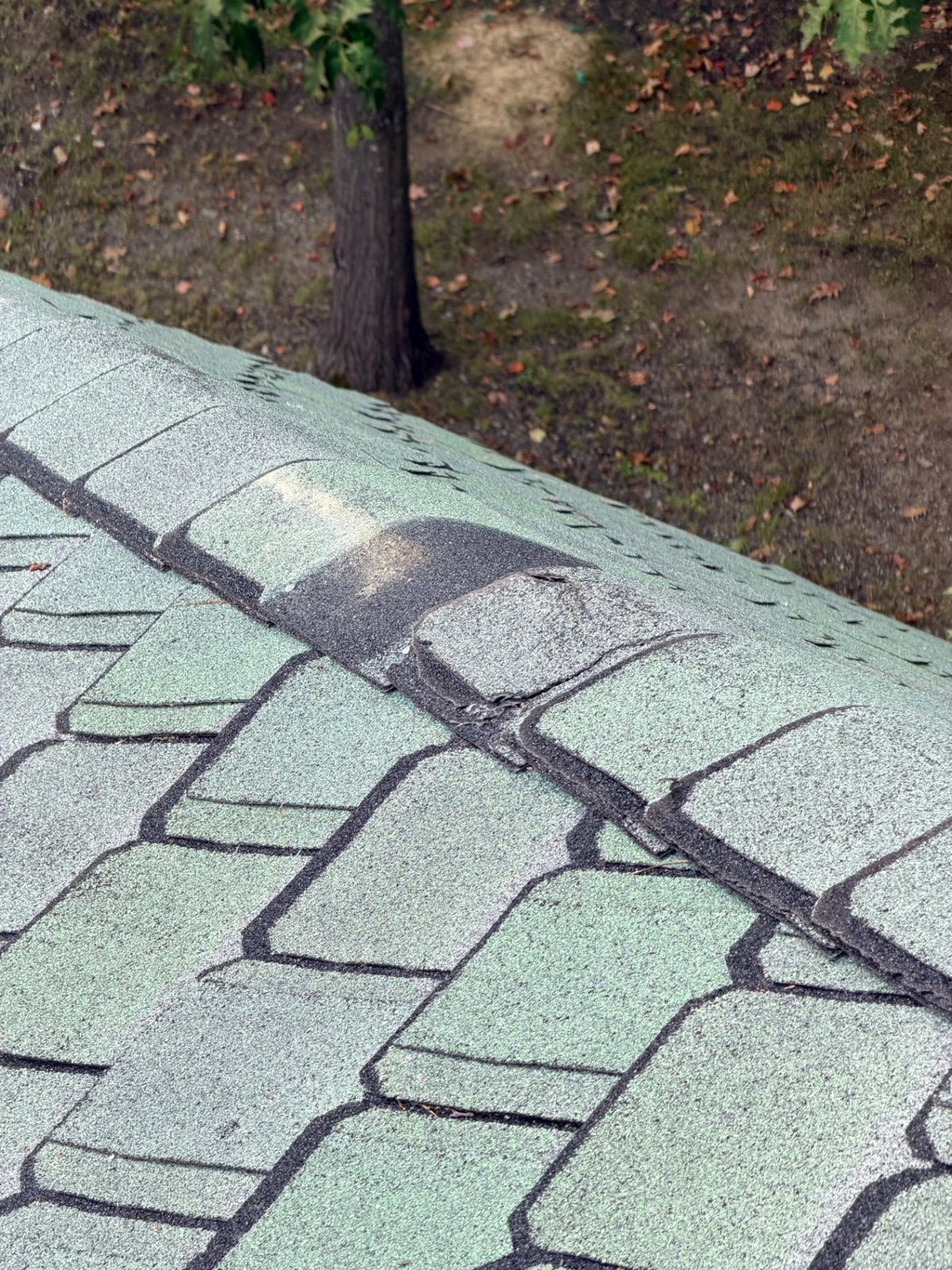
Missing and damaged ridge cap pieces on the green Saco roof before repair
Missing and damaged pieces along the ridge, documented during the inspection.
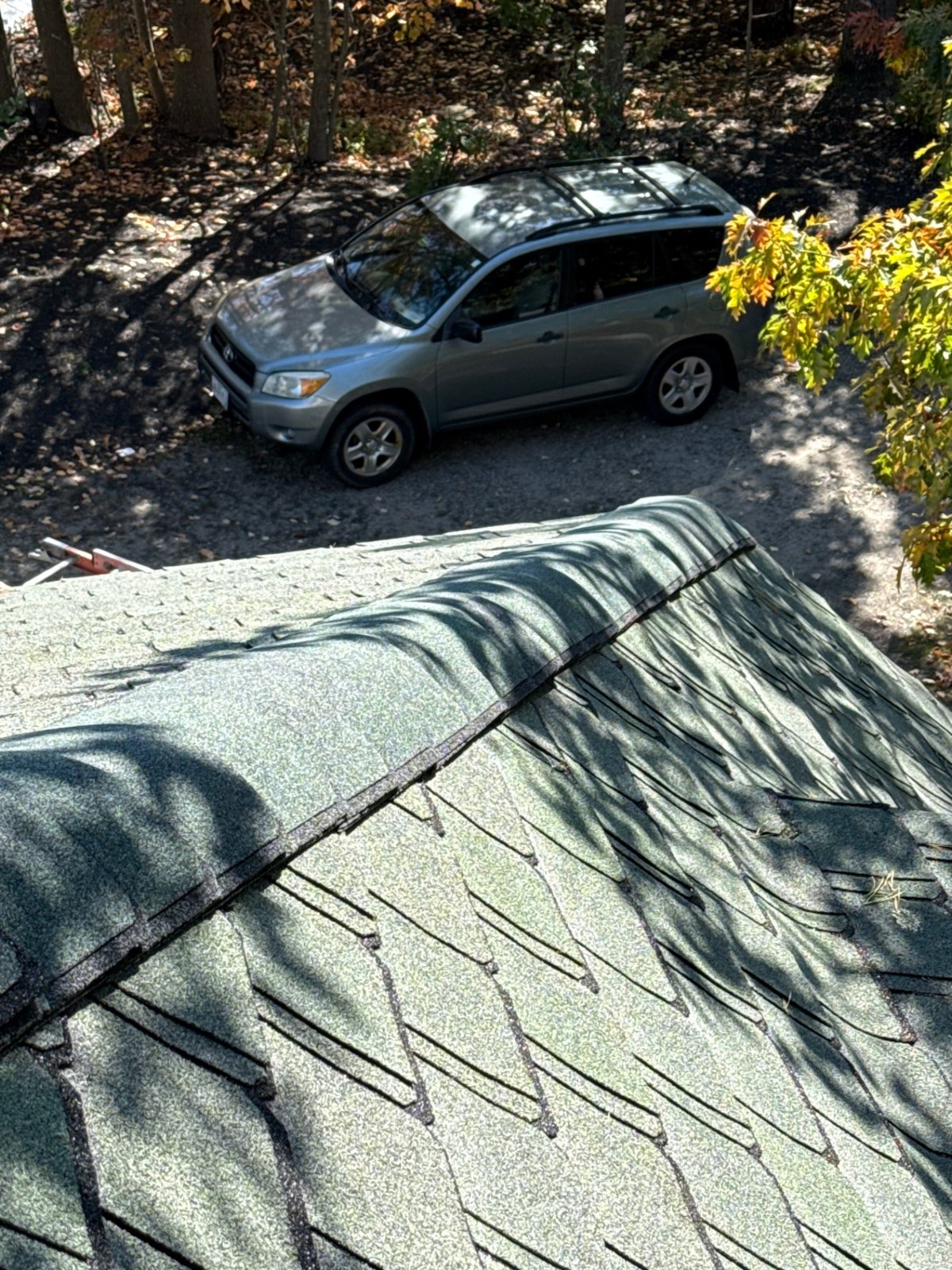
Close-up of replacement ridge cap above patterned CertainTeed Carriage House shingles
Special-ordered replacement cap, matched to the existing shingles.

Finding the real entry point

The stain on your ceiling is rarely directly below the hole. Water gets in at one spot, runs along rafters and sheathing, and drips wherever gravity takes it. Patch the shingles above the stain and the leak usually comes back.

So we start inside: the stain, the attic, the underside of the deck. From there we trace back to the source on the roof. The usual suspects are a flashing seam at a chimney or sidewall, a nail pop, a cracked vent boot, or a valley that ices up in winter. On steep, tall roofs we can't walk safely, a drone inspection lets you see the problem yourself before anyone prices a repair.

Repair or replace?

A repair makes sense when the surrounding roof still has years of service in it: a sound 12-year-old roof with a flashing failure doesn't need a new roof, and we'll say so. It stops making sense when the shingles around the leak are brittle, curling or losing granules, because then your repair money goes into a surface you'll pay to tear off soon anyway.

Either way, we fix the source, not the symptom: new flashing rather than re-used, nothing smeared with caulk. If the roof is done, we'll show you why and give you a written quote for a new one.

  • The roof is 20+ years old (asphalt typically lasts 25 to 30 years in Maine)
  • Leaks keep coming back, or ice dams form every winter
  • Shingles are curling, cracking or losing granules
  • Soft spots in the decking, or daylight in the attic
  • Your insurer is asking for a replacement to renew

More on repair or replace, and how a full roof replacement works.

Help paying for an urgent leak

MaineHousing specifically lists severe roof leaks as an example of a condition that may qualify for its Emergency Grant. Eligibility is decided by the Community Action Agency serving your county, so contact them before authorizing permanent work. Our Maine Roof Assistance guide covers the programs and what to ask.

Frequently asked

Common questions

Should I repair the leak or replace the roof?

If the roof is under about 15 years old and the damage is limited, a repair may make sense. Past 20 years, with repeat leaks or widespread wear, replacement usually costs less over time. We'll tell you which one you're looking at before you spend anything.

Why isn't the leak right above the stain on my ceiling?

Water travels along rafters and sheathing before it shows up inside, so the stain on your ceiling is rarely directly below the entry point. We start inside (the stain, the attic, the underside of the deck) and trace back to the real source on the roof, which is often a flashing seam, a nail pop, or a vent boot.

Can I get help paying for a leak repair?

Possibly. MaineHousing specifically lists severe roof leaks as an example of a condition that may qualify for its Emergency Grant, administered through Community Action Agencies. Contact the agency before authorizing permanent work. Our Maine Roof Assistance page explains the programs.

Will insurance cover my leak?

Leaks caused by storm damage (wind-torn shingles, fallen branches, ice dams) are often covered; wear and age are not. Photograph the damage early. Our insurance claims page walks through the process.

Roof Leaks across southern Maine

Local roofing notes for towns we serve, including:

Ready when you are

A roof is a long decision. Let's get yours right.

No pressure, no gimmicks. Just a free estimate, an exact written quote, and a roof built for Maine weather.