Skip to content

Standing Seam Metal

Standing Seam Metal Roofing in Maine

Clean vertical lines, concealed fasteners, lifetime-grade performance. The premium roof for the homes that earn it.

Standing seam is what you put on a home you intend to keep — or one you intend to sell to a buyer who recognizes quality the moment they pull in the driveway. Vertical panels with raised, interlocking seams. No exposed fasteners. Nothing for ice, snow, or wind to grab.

We install both snap-lock and mechanical-lock systems in widths and profiles that suit the architecture of the home, with finish options from classic charcoal to coastal blues to traditional copper-tone — all backed by manufacturer finish warranties.

At a glance

  • True mechanical-lock or snap-lock standing seam panels
  • Concealed fasteners — no exposed screws, no weak points
  • Kynar 500® / PVDF finishes warrantied against fade and chalk
  • Engineered for Maine snow load and high coastal wind
  • Often the last roof your home will ever need
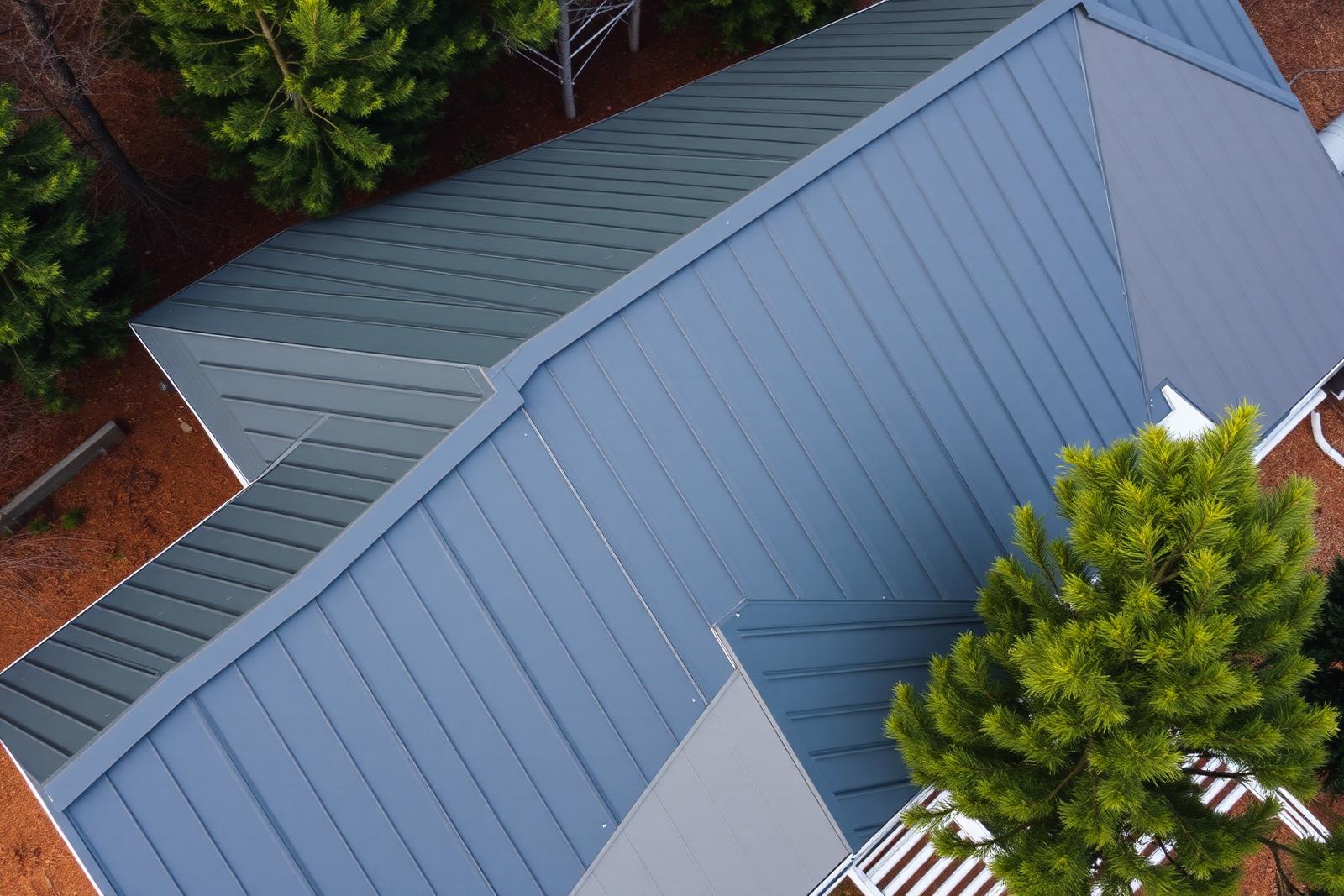
Standing seam metal roof with clean vertical seams running ridge to eave

What standing seam actually is

Standing seam is a metal roofing system of vertical panels — typically 12, 16, or 18 inches wide — joined by raised seams that run from ridge to eave. The fasteners (clips) live under the seam, hidden, and allow the panel to expand and contract with temperature swings without buckling. Nothing pierces the weather plane.

Substrates are Galvalume steel (the workhorse, 24-ga is the residential standard), aluminum (the coastal upgrade, fully corrosion-proof), or copper (the heirloom option). Topcoats are baked-on PVDF — Kynar 500 or Hylar 5000 — in 30+ standard colors and a finish warranty that runs 30–40 years.

Snap-lock vs. mechanical-lock

Snap-lock panels are formed with mating seam edges that click together as the next panel is set — fast, clean, ideal for pitches of 3:12 and steeper. Mechanical-lock (also called double-lock or seamed) panels are folded over and crimped in the field with a powered seamer; the resulting seam is effectively waterproof and rated for lower pitches and harsher exposure. For most southern Maine residential roofs at 6:12 or steeper, snap-lock is the right call. For low-slope roofs, oceanfront homes, or anything where "this needs to last 75 years" is the brief, we go mechanical-lock.

How we install standing seam

  1. Full tear-off, deck inspection, deck repair. Standing seam shows every flaw underneath — the deck has to be flat and sound.
  2. High-temp synthetic underlayment. Rated for metal's higher surface temperatures and longer service life.
  3. Ice & water shield. Eaves, valleys, sidewalls, penetrations — non-negotiable in Maine.
  4. Panel forming. Many of our standing seam jobs are panel-rolled on site to length, eliminating horizontal seams in the field.
  5. Clip layout and panel install. Clips fastened on the manufacturer's spacing, panels set ridge-to-eave, seams engaged (or seamed) as we go.
  6. Trim, ridge, snow retention. Custom-bent rake and eave trim, vented or solid ridge cap to match the ventilation design, engineered snow guards (clamp-on — no penetrations).
  7. Final walk. Seam check, film removal, touch-up paint where needed, magnet sweep.

Why standing seam works in Maine

The concealed fastener system means there are no gaskets to fail at 20 years — the most common failure point on exposed-fastener metal. Snow sheets off cleanly with engineered snow retention directing where it lands. Wind ratings on properly clipped standing seam routinely exceed 140 mph. Coastal salt is a non-issue with PVDF finishes on Galvalume or aluminum. And because clamp-on snow guards and solar mounts don't penetrate the panel, the system stays watertight for its full service life.

Who standing seam is right for

Premium homes (typically $600k+) where curb appeal drives resale, coastal homes where salt and wind chew through other systems, homes with steep pitches above doors or decks where snow retention matters, modern and farmhouse architecture where the vertical-seam aesthetic earns its keep, and any homeowner planning to add solar in the next decade. Less ideal for very cut-up roofs with many small planes (the labor escalates), or budgets where a high-end architectural asphalt at one-third the cost would solve the problem just as well.

Warranty and lifespan

PVDF finish warranties: 30–40 years against fade, chalk, and film integrity. Substrate warranties (Galvalume): 25–35 years against perforation. Realistic service life: 50+ years on snap-lock, 75+ on mechanical-lock with copper or premium aluminum. Our workmanship warranty covers the install for the period in your contract — and because the system is clipped and seamed rather than face-fastened, panels can be re-tightened or replaced decades in without re-roofing.

Frequently asked

Common questions

How long does a standing seam roof last in Maine?
A properly installed standing seam roof in southern Maine routinely lasts 50+ years, and often outlasts the home's next owner. Kynar 500 / PVDF finish warranties run 30–40 years; the panel substrate itself is good for considerably longer.
Snap-lock vs. mechanical-lock — what's the difference?
Snap-lock panels click together with male/female seam edges — faster to install, excellent for most residential pitches (3:12 and steeper). Mechanical-lock panels are field-seamed with a powered crimper to fold the seam over itself — the highest-performance option for low-slope roofs, harsh exposure, and the longest service life. We'll recommend the right one for your roof's pitch and exposure.
Is standing seam worth the cost over architectural asphalt?
On a 30-year horizon, often yes — one standing seam roof replaces two-and-a-half asphalt roofs and costs roughly two-to-three times as much. On resale value for premium homes (typically $600k+) the curb-appeal lift usually returns most of the difference. On a starter home you plan to sell in 5 years, asphalt is the smarter spend.
What pitches can standing seam be installed on?
Snap-lock systems are rated for 3:12 and steeper. Mechanical-lock systems can go down to 1:12 (and sometimes lower with manufacturer-specific assemblies). We don't install standing seam on truly flat roofs — that's a single-ply or EPDM conversation.
Will I get oil canning?
Oil canning (visible waviness in flat sections of metal panels) is inherent to thin-gauge metal and isn't a defect. We reduce it by specifying striations or stiffening ribs in the panel, choosing thicker gauges (24-ga over 26-ga), and using consistent clip spacing. On the right profile it's barely visible.
Can I add solar to a standing seam roof?
Yes — standing seam is the easiest roof to mount solar on, because mounts clamp directly to the seams with no penetrations. That alone often makes standing seam the right call for a solar-ready home.
Ready when you are

A roof is a long decision. Let's get yours right.

No pressure, no gimmicks. Just a precise quote, an honest conversation, and a roof built for Maine weather.